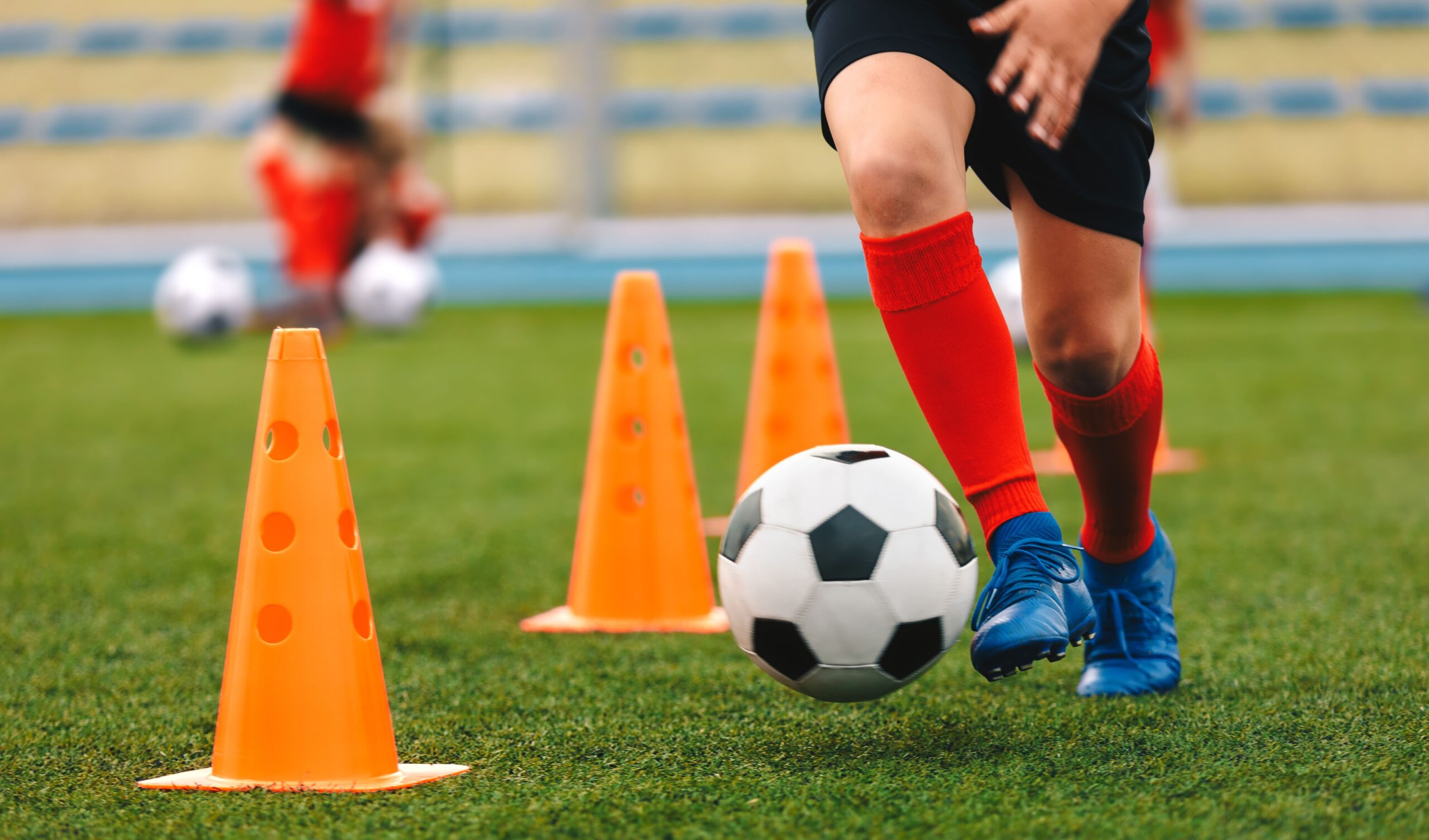
Dribbling is a critical soccer skill for every player. It helps you control the game, outsmart opponents, and create opportunities. According to OPTA, a successful dribble is when you beat an opponent while retaining possession.
Achieving this requires technical ability, mental awareness, and consistent practice. You must also learn many skills, such as nutmegs, stepovers, rainbow flicks, etc.
However, you need insightful data to improve your dribbling skills. With Playermaker, our cutting-edge AI soccer tracker, you can effortlessly track your progress, set achievable goals, and measure your improvement over time.
In this article, we’ll detail why dribbling is so crucial, how to be a better dribbler, the best techniques, and the common mistakes to avoid:
Why Is Dribbling Important In Soccer
Dribbling is the backbone of attacking play in soccer. It lets you dictate the tempo, create scoring chances, and keep the opposition on their heels.
Dribbling is also critical for defenders. For instance, wing-backs regularly require strong dribbling skills to defend and push the ball forward.
Here are some important reasons why dribbling is so important:
1. Create Scoring Opportunities
Dribbling is usually the first step toward creating scoring chances. You can build opportunities for a site; you can also set up a teammate when dribbling past defenders. This is important in tight games where breaking through a defense is critical.
2. Draw Opponents and Create Space
When you take on defenders, you force them to leave positions and disrupt the defensive structure. This creates space for your teammates to exploit. Moreover, you can stretch the defense and create gaps for others to run into.
3. Maintain Possession and Control the Game
Dribbling is also about maintaining control over the game. Good dribblers can retain possession under pressure. This skill allows their team to control the tempo and rhythm of the match.
Holding onto the ball in critical moments can frustrate the opposition and change the flow of the game. As a result, this can change the outcome of a game.
4. Fundamentals of Dribbling
Mastering the fundamentals of dribbling is essential for all soccer players. These basics lay the foundation for more advanced techniques, which are critical in ensuring consistent performance.
5. Maintaining Close Ball Control
Close ball control is the essence of effective dribbling. When the ball stays near your foot, you can react quickly to defenders and change direction with ease. This skill is particularly important in the penalty box.
6. Keeping Your Head Up
One of the most common mistakes players make is dribbling with their heads down. Keeping your head up while dribbling allows you to observe the field, spot teammates, and anticipate defensive movements.
7. Getting a Good First Touch
A good first touch is vital as it sets up your next move, whether that’s a pass, shot, or continued dribble. It’s about cushioning the ball in a way that allows you to maintain control and immediately react to the situation around you.
8. Different Surfaces and How They Affect Dribbling
The surface you play on can significantly impact your dribbling. Grass, turf, and indoor courts each present unique challenges. Therefore, adjusting your dribbling technique—based on the surface—helps you maintain effective control.
9. Body Positioning and Balance
Proper body positioning and balance are crucial for maintaining control while dribbling. A low center of gravity helps in making quick turns and changes in direction. Lean slightly forward and keep your knees bent to stay balanced and ready to react.